
At Turn 12 of the Circuit of the Americas, the uphill run into the amphitheater section explains why the Formula 1 US Grand Prix has become more than a novelty stop on the calendar. The Formula 1 US Grand Prix now carries the weight of a market-defining event for the sport in North America, and Austin knows it. Walk the infield before practice and you hear Australian, Mexican, British and Californian accents trading predictions near the barbecue stands. That mix matters. The Formula 1 US Grand Prix is not simply a race imported for television;it is a live experiment in whether European motorsport culture can blend with American event management. Some of it works beautifully. The sight lines from the grass berms are generous。
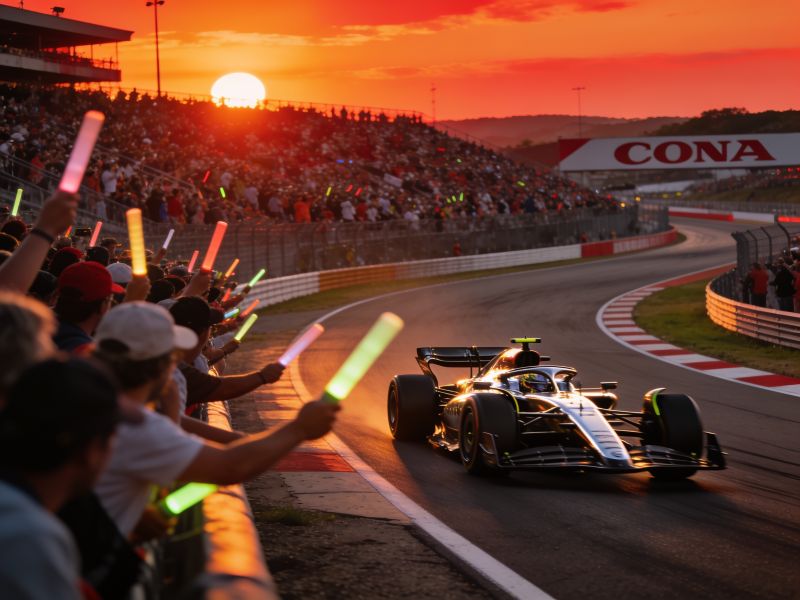
the paddock is compact enough for genuine celebrity spotting, and the downtown fan zones make the race feel like a citywide takeover. Some of it grates: shuttle queues, $18 parking lots, and a rideshare pickup system that can turn a ten-minute exit into an hour-long negotiation. The Formula 1 US Grand Prix exposes both the ambition and the friction.On track, the Formula 1 US Grand Prix asks a specific question: can a modern F1 car survive COTA’s bumps while still producing overtakes?The first sector rewards commitment through the Esses, where a tiny lift can cost three tenths. Turn 11’s hairpin creates the cleanest passing zone。but the long back straight often flatters cars with efficient drag reduction rather than pure horsepower. Sprint weekends complicate the Formula 1 US Grand Prix further. One practice session means teams arrive with simulation data and guesswork, then lock in setup choices before the car has fully settled. I watched a midfield engineer in 2023 stare at a ride-height spreadsheet as if it were a weather map;by Sunday, that caution made sense. The sprint format gives spectators more track action, yet it can flatten the narrative arc of a traditional race weekend. The Formula 1 US Grand Prix still works as a sprint venue because COTA’s layout creates enough variety, but the compromise is real. The Formula 1 US Grand Prix rewards teams that think clearly under compressed pressure.The 2023 Formula 1 US Grand Prix delivered a technical controversy that suited the track’s character. After the race, post-event checks found excessive plank wear on two cars, and the disqualifications reshuffled the classification hours after the podium ceremony. That episode was not random. COTA’s bumpy surface, combined with low ride heights and stiff setups, puts wooden skid blocks under relentless load. Teams chase downforce through the high-speed sections, then pay for it in the bumpy transitions. The Formula 1 US Grand Prix therefore doubles as a compliance test, whether teams like it or not. I find that tension compelling. A race should punish compromise, and the Formula 1 US Grand Prix does exactly that. The downside is that results can be rewritten long after spectators leave。
which is unfair to fans who watched a different order cross the line. The Formula 1 US Grand Prix needs clear, consistent enforcement more than it needs another layer of drama.Commercial energy around the Formula 1 US Grand Prix is unmistakable. Austin’s hotel rates spike, private jet traffic fills the regional airports, and hospitality tents sell out months ahead. That money matters, but the local texture matters more. A race that once felt like a beachhead now has routines: the same taco stands near the main gate, the same cycling fans riding out from downtown。the same confusing tram signage. The Formula 1 US Grand Prix has become part of Austin’s autumn identity, alongside football weekends and music festivals. Motorsport tourism is the engine here, and it is not only about race day. Thursday paddock tours, team merchandise pop-ups, and driver appearances spread spending across the city. Still, growth has costs. Traffic remains the weakest link in the Formula 1 US Grand Prix operation, and the circuit’s remote location makes every bottleneck worse. A better shuttle plan and clearer pedestrian routes would improve the event more than another VIP lounge.Competitively, the Formula 1 US Grand Prix sits at an interesting intersection. The circuit favors cars with strong front-end grip and stable rear balance。
which can compress the field in qualifying and stretch it in the race. Tire degradation is usually manageable, but track temperature can turn the medium compound into a liability. I would rather see the Formula 1 US Grand Prix keep its current layout than chase a headline-friendly redesign. COTA has flaws—the long straight can produce processional laps, and the infield sections are unforgiving—but it has a recognizable signature. The Formula 1 US Grand Prix earns its place because drivers genuinely enjoy the challenge and fans get a proper festival. The event still needs to fix its ground-level logistics, especially transport and shade. Those are unglamorous problems. They are also the difference between a great race weekend and a great race trapped inside a mediocre one. The Formula 1 US Grand Prix has the raw material;execution will decide how far it goes.